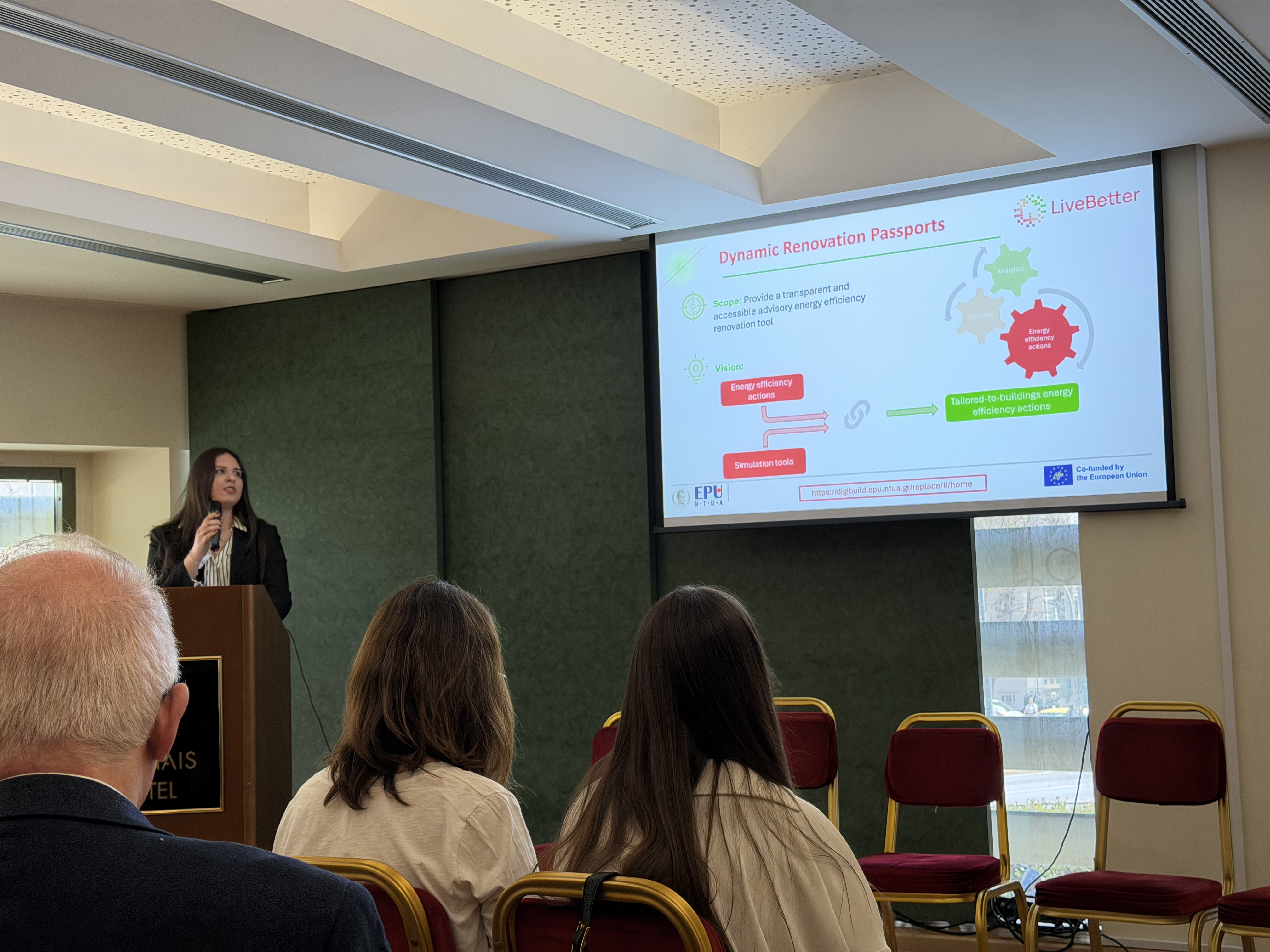
On 22 April 2026, LiveBetter took part in a national engagement event organised by the OneClickRENO project in Athens and hosted by TREK Development SA.
The event created a valuable opportunity to present LiveBetter’s work and to exchange views on the common objectives shared by the two projects, especially in relation to Deep Renovation Passports and their relevance for Greek public buildings. In a national context where building data are often fragmented and administrative procedures remain complex, these discussions are becoming increasingly important.
LiveBetter was represented by Vasilis Michalakopoulos and Daniela Stoian (ICCS). The invitation was coordinated through the collaboration of shared partners from the Instituto Valenciano de la Edificación (IVE), in particular Miriam Navarro Escudero and Blanca Larraz Sancho-Tello. Special thanks also go to the TREK Development SA team, and especially Christos Tsanos and Melina Lazaropoulou, for hosting such a well-organised and welcoming event.
A central part of the programme was the moderated discussion following the presentations of the two projects. Rather than presenting competing solutions, the discussion focused on the different roles that renovation passport approaches can play in supporting public building renovation. OneClickRENO’s approach points more towards a scalable, typology-based method for prioritising building stock, while LiveBetter’s Dynamic Renovation Passports look more closely at the individual building level, supporting more tailored renovation pathways and investment decisions.
The exchange also highlighted the potential complementarity between the two approaches. A broader screening methodology can help identify priorities at scale, while a more dynamic and building-specific passport can support the next step, offering more detailed insight for selected assets. This perspective opened up a useful discussion on what is realistically needed to support renovation planning in Greece today, from minimum data availability to technical capacity and implementation barriers.
Overall, the event was a useful occasion to strengthen synergies between initiatives working towards better renovation strategies for the built environment. It also confirmed the importance of collaboration across projects in order to turn shared European objectives into solutions that can respond to real needs on the ground.